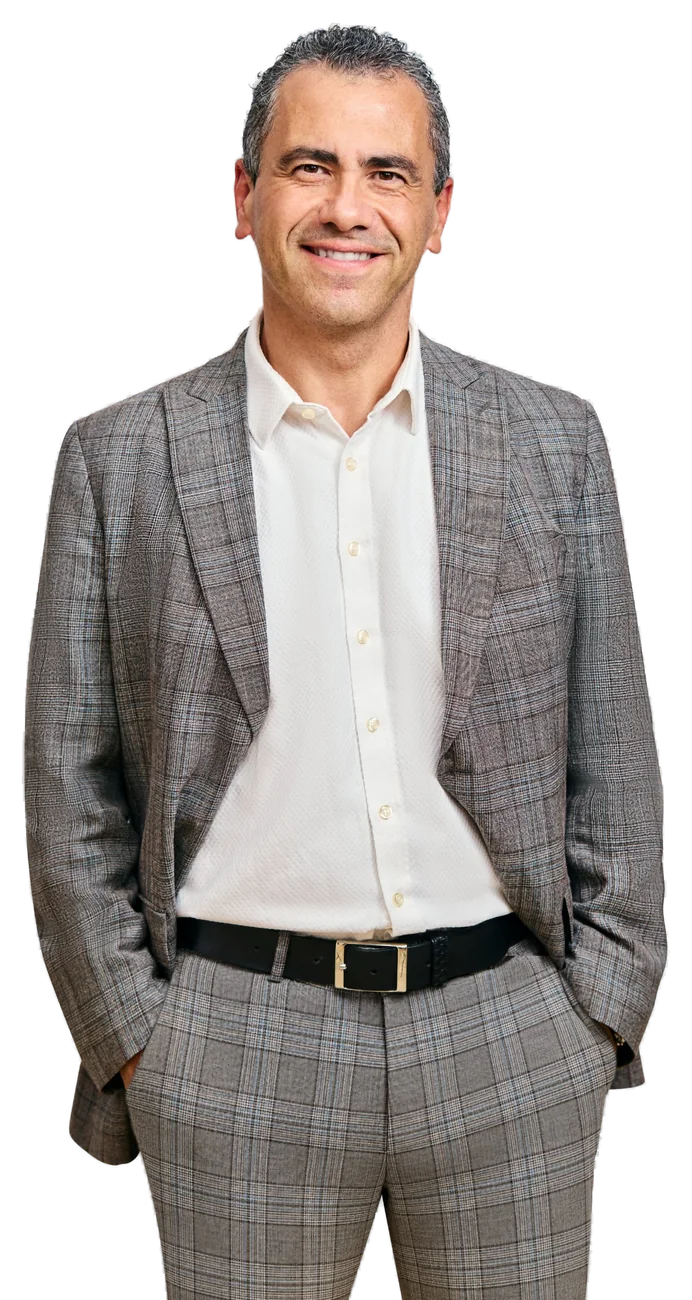
Ilker Aslan

Ilker Aslan

I study how insurance and reinsurance markets price, ration and pass on the risks that societies cannot carry alone.

Economist and lecturer at Kalaidos University of Applied Sciences, Zürich. Doctorate from the University of Fribourg, Switzerland, after more than a decade as a treaty reinsurance underwriter.

Ilker Aslan, standing, in a grey check suit
10+years in treaty reinsurance underwriting, EMEA and international
3journal articles, plus a book and a book chapter
25working papers
6languages: English, German, French, Turkish, Spanish, Greek

A research programme, read like a reinsurance programme

A reinsurance programme is drawn as a tower: each layer sits on the one beneath and pays only for larger losses. My work stacks the same way, from theory at the base to the state at the top. Each layer's height follows the number of papers in it; select one to see them.

Featured work

Four papers, each shown through the result it turns on. The figures are redrawn from the papers’ own tables, simulations and sources.

Insured share of catastrophe losses in the final decade: 74 per cent with a fixed risk load, 66 per cent under conventional pricing with stationary losses, and 59 per cent when losses drift with the climate, a 15-point protection gap.

Insured share of catastrophe losses over the last decade of each simulated path, mean of 1,000 paths. Source: the article’s simulation.
Risk Management and Insurance Review, 2026. Open access

Why Risk-Based Premiums Will Not Close the Catastrophe Protection Gap

Europe insures only a fraction of its natural catastrophe losses, and the proposed EU scheme relies on risk-based premiums to change that. Once climate change removes a stable loss distribution, prices rest on convention, capacity moves in cycles and rationing ratchets upward, so pricing alone cannot close the gap.

Read the article

Japan, 2011: loss 3.5 per cent of GDP, public debt about 230 per cent of GDP, the yen rose. Turkey, 2023: loss about 9 per cent of GDP, public debt about 30 per cent of GDP, the lira fell about 30 per cent.

Gross public debt when each earthquake struck, and the currency’s response. Sources: Cabinet Office, Bank of Japan, CBRT, IMF.
Review of Political Economy, 2026

Monetary Sovereignty and Catastrophe Fiscal Capacity

Japan carried far more debt yet absorbed the 2011 earthquake without financial stress; Turkey’s 2023 earthquakes were followed by a sharp fall in the lira. The paper introduces catastrophe fiscal capacity, a state’s ability to finance recovery without currency, inflation or debt stress, and traces it to monetary sovereignty.

Read the article
Market average, end 2023 Market average, end 2025

All ten cyber catastrophe bond tranches lie above the market's average price per unit of expected loss, both at the end of 2023 (3.68 times expected loss) and at the end of 2025 (2.44 times); the mean premium ratio is 2.3.

Every publicly priced cyber catastrophe bond tranche, November 2023 to June 2026, against the whole market’s average price per unit of expected loss. Source: Artemis; author’s calculations.
Working paper, 2026

The Pricing of Cyber Catastrophe Bonds

Cyber risk reached the catastrophe bond market in November 2023. All ten priced tranches paid more than natural-catastrophe bonds per unit of expected loss, about twice as much on average, and the premium did not fade as the wider market softened.

Read the working paper

Keynes sat on the National Mutual board from 1919 and chaired it from 1921 to 1938, and was a director of the Provincial from 1923 to 1946. His credit-cycling policy failed between 1929 and 1932; the General Theory appeared in February 1936; his 1938 memorandum to the board restates its Chapter 12.

Keynes’s insurance appointments against the writing of the General Theory. His 1938 memorandum to the National Mutual board restates Chapter 12 almost clause by clause.
Working paper, to be presented in Amiens, December 2026

Keynes at the National Mutual

Keynes chaired a life insurer while he wrote the General Theory. Read alongside his business papers, Chapter 12 shows how boardroom experience gave concrete meaning to convention, reputation and liquidity in his theory of long-term expectation.

Read the working paper

“The protection gap … is not a residual friction awaiting better markets; it is the equilibrium form taken by a private market asked to price the unpriceable.”

From Why Risk-Based Premiums Will Not Close the Catastrophe Protection Gap, Risk Management and Insurance Review, 2026

Publications and working papers

Eight papers to start with, each in one sentence. The full list of thirty and the filters are one click away; titles open the publisher, SSRN or a page with the abstract and PDF.

    Posted versions are also listed on SSRN and Google Scholar.

    Where the work is presented and taught

    I am glad to give seminars and guest lectures on insurance, reinsurance and catastrophe risk, and on monetary, macro and development economics.

    Talks

    • 27 Apr 2027Research colloquiumKalaidos University of Applied Sciences, Zürich
    • 5–6 Feb 2027Existential Risk from Artificial Intelligence and the Limits of InsurabilityWorkshop at Georgia State University, Atlanta. Presenter and discussant
    • 3 Dec 2026Keynes at the National MutualInternational conference “Rethinking Economics with Keynes: 90 Years after the Publication of The General Theory”, Amiens, France

    Teaching

    • Since 2026Kalaidos University of Applied SciencesLecturer, Zürich
    • Autumn 2026University of ZurichInterest-rate risk in insurance asset-liability management. Lecture for master's students, Topics of Applied Risk Management, Department of Finance. Slides and one-page primer (PDF)
    • Since 2025Höhere Fachschule VersicherungReinsurance, insurance mathematics and statistics, Zürich

    From the underwriting desk to the seminar room

    Career timeline: SIX Securities Services 2010 to 2014; Swiss Re 2015 to 2020, as treaty underwriter from 2016; independent consultant 2020 to 2022; Synpulse 2022 to 2024; AXIS Re 2024 to 2025; teaching at HFV from 2025 and at Kalaidos and the University of Zurich from 2026. Research: the doctorate published as a book in 2014, a journal article in 2021, a book chapter in 2023 and two journal articles in 2026.

    Industry, teaching and research since 2010. The research markers show the published doctorate and publications in journals and books.

    I am an economist working where insurance markets, financial structures and macroeconomic theory meet.

    Before returning to research and teaching I spent more than a decade in treaty reinsurance in EMEA and international markets, most recently as a senior underwriter for liability, casualty and motor business. That practice shapes the questions I ask: how reinsurance capacity is priced and rationed, how catastrophe and cyber risk reach capital markets, and who absorbs the losses that markets will not carry.

    My research combines quantitative methods with a post-Keynesian theoretical foundation. I hold a doctorate in economics from the University of Fribourg in Switzerland, published as a book by Logos Verlag and reviewed in the Review of Keynesian Economics, a Master of Science in EU Business and Law from Aarhus University in Denmark, and a Bachelor of Science in Business Administration from the University of Texas at Dallas in the United States.

    I live in Zürich with my wife and our two daughters.

    Download CV (PDF)

    • 2024–2025AXIS ReSenior Underwriter, liability, casualty and motor treaty
    • 2022–2024Synpulse Management ConsultingSenior Advisor, insurance practice
    • 2020–2022Independent consultant
    • 2015–2020Swiss ReTreaty Underwriter, casualty and liability; Reinsurance Planning Analyst
    • 2010–2014SIX Securities Services

    Let's talk about risk.

    For research collaboration, seminar and conference invitations, teaching and media requests, e-mail is the best way to reach me.